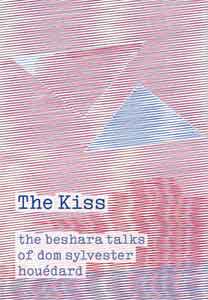
Bulent Rauf wrote these essays  during the last fifteen years of his life. They display his wide range of knowledge and interests. Bulent Rauf wrote these addresses from the point of view of One and Only One Unique Existence. Ibn Arabi's writings on astrology, exposing the cosmos as the signs and image of God, have been distilled by Titus Burkhardt. Ibn 'Arabi said that the Fusus should not be bound with any other of his books. It is a unique distillation of the spiritual wisdom for which he was the vehicle. John Bennett was a a great spiritual teacher of the 20th century. These talks must be almost the last that he gave, and represent his ripest and most mellow wisdom. Passages from the Futuhat al-Makkiya by Ibn Arabi, translated and expanded by Ismail Hakki Bursevi. For someone who is ready to look into the depth of his or her own being, to the kernel of the kernel which is his essence, this book is invaluable.
Ibn Arabi wrote these pen pictures of some of the contemplatives and spiritual masters among whom he spent his early years in Andalusia. Drawing freely on knowledge of diverse spiritual traditions, Dom Sylvesters comments illuminate and expand on the meanings embedded in six of Eckhart's greatest sermons. Abd al-Kerim Jili's book Universal Man is an exposition of the appearances of Absolute Being as Essence, Names, Qualities and Divinity, and of the corresponding contemplative states in the path of Union. Whoso Koweth Himself... is a statement of the fact of the essential unity of all existence, addressed to the most intimate consciousness of unparallelled simplicity and directness. The Twenty-Nine Pages provides an introductory guide to the language and thought of Ibn 'Arabi, particularly those aspects of his doctrine which refer to the unity of being and the perfectability of man. Ibn Arabi used poetry in all his spiritual writings, and this CD presents some of his poems in a completely contemporary setting.

Beshara Publications

Here you can find short introductions to the authors we publish, and substantial extracts from their works.

The books are concerned with the Unity of Existence, an understanding which has been present at the heart of human knowledge throughout our history.

New DVD

The cover of Turning, featuring the Sema of the Whirling Dervishes in Konya, held each year in honour of Jelaluddin Rumi. Narrated by Diane Cilento and Bulent Rauf. Turning
A film by Diane Cilento, 1973.

Turning traces the evolution of the human concept and appreciation of Universal Nature. The film begins with the Anatolian neolithic city of Çatal Hüyük, 50 kilometers from modern Konya. Discovered and partially excavated by well-known Archaeologist, James Mellaart, Çatal Hüyük flourished 7,000 years before the birth of Christ and is the earliest known city. Its culture was dominated by the symbol of the goddess, maternal and eternally prolific.

Taking in the ope-air temple of the Hittites, through the images of Diana of the Helenistic and Roman periods, it comes to the Virgin Mary, who is believed to have spent her last days at Meryemana above the ancient city of Ephesus. From there it becomes an introduction to Jelaluddin Rumi, in the evocative imagery of the sema' of the Mevlevi dervishes.

This production was made using the best available copy of the original. It is a precious record of an outstanding independent film, which preserves the freshness of the sema' in Konya in the early 1970s, and conveys the stunning narrative voices of Diane Cilento and Bulent Rauf.

More about Turning